


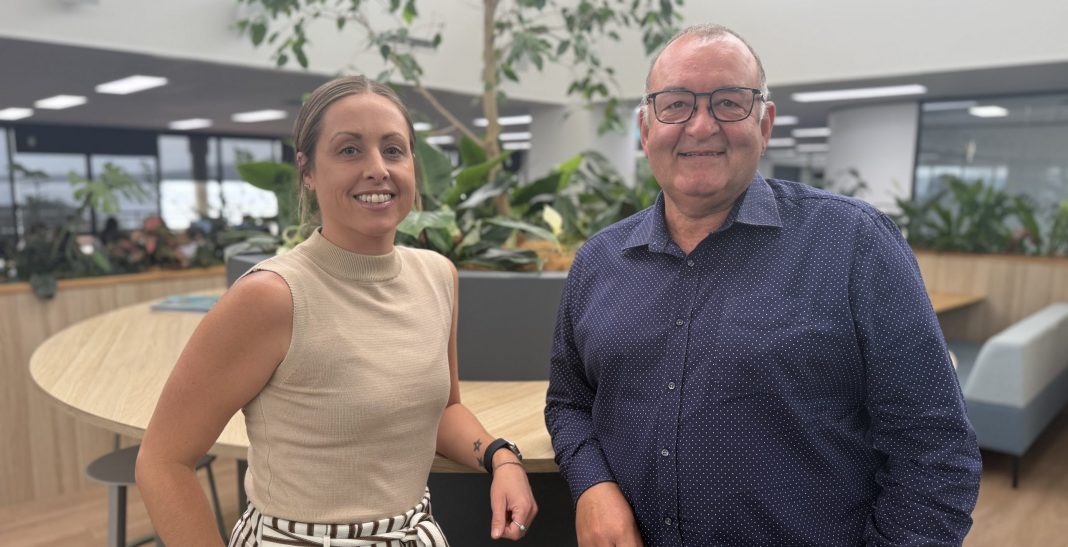
Partners Life’s Andries van Graan and Gemma Vivian reflect on the forces reshaping life insurance advice – from regulation and adviser demographics to AI and underinsurance – and what it means in practical terms for advice businesses looking to grow, adapt and remain relevant…
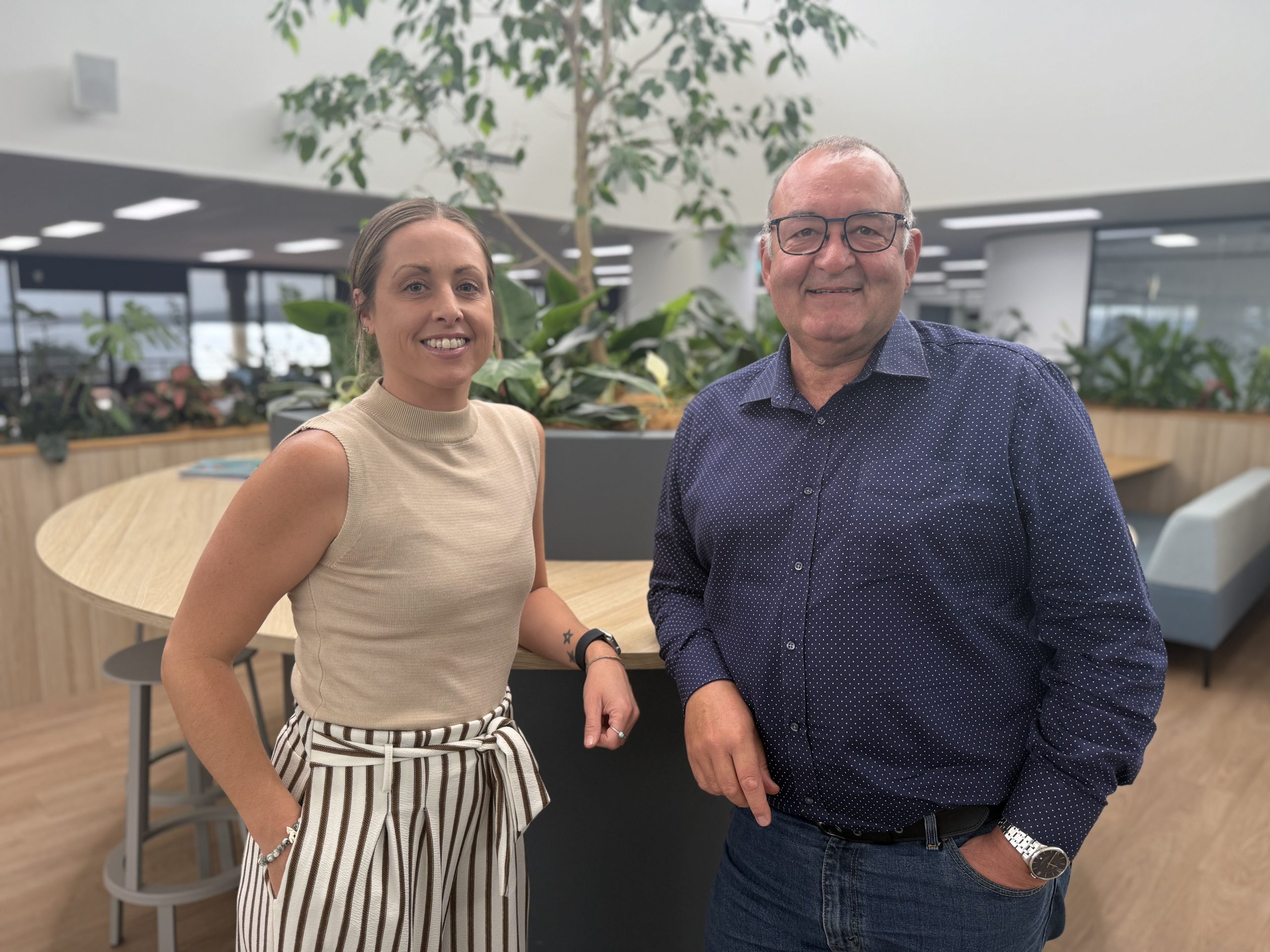
Behind every shift in New Zealand’s life insurance sector are the people navigating its practical realities. Among them are Partners Life’s Chief Distribution Officer, Andries van Graan, and General Manager – Adviser Engagement, Gemma Vivian, whose combined backgrounds – spanning advice, distribution and operational leadership – provide a grounded perspective on where the industry has come from and where it may be heading.

This interview offers a glimpse into what drives both Andries and Gemma, how they see the advice landscape shifting, and why they believe the industry’s best days still lie ahead.
From South Africa to Aotearoa
Before beginning a career that would span more than three decades in life insurance, Andries van Graan served in the South African army – an experience far removed from the profession he would later come to lead. After entering the insurance sector, he spent 14 years with a single insurer in South Africa before immigrating to New Zealand nearly twenty years ago.
On arriving in New Zealand, van Graan rebuilt his career from the ground up. His first role in NZ was as a BDM and he then moved into senior dealer group leadership. He says those years provided him with a deep appreciation for the importance of relationships, market networks and the broader dynamics that shape advice businesses. They also laid the foundation for the distribution leadership roles he would eventually take on at Partners Life.
Nine years ago, Partners Life’s Founder, Naomi Ballantyne, invited him to join the insurer. He spent most of that time leading adviser distribution before assuming responsibility around two years ago for the entire distribution function at the request of new CEO, Michael Weston.
A Career Built Inside the Engine Room
By contrast, Gemma Vivian’s career began almost accidentally – a common theme, she notes, among insurance professionals.
“Once you’re in, it’s really hard to leave. I’ve been in insurance for 16 years and at Partners Life for 13 – and I absolutely love it.”
Vivian’s early roles spanned operations, new business, and key account management. She progressed to Principal Key Account Manager before moving into distribution eight years ago, first as an Adviser Development Manager and then as Senior ADM. Today she is the General Manager of the IFA Distribution Team at Partners Life.
Vivian’s connection to insurance stretches back to childhood. Her mother worked with Naomi Ballantyne when Vivian was young, “…so I’ve known Naomi most of my life,” notes Vivian, adding that what anchors her to the industry is its sense of purpose.
“You genuinely feel like you’re making a difference. Everyone has responsibilities and KPIs, but above all of that sits a desire to do the right thing for clients. It’s a very giving industry.”
Regulation: From Resistance to Maturity
The leaders have had front-row seats to the industry’s regulatory transformation. And both acknowledge the journey wasn’t always smooth.
Early reactions from advisers ranged from scepticism to outright resistance.
“There was a lot of kicking and screaming,” van Graan admits. “Advisers had been doing the job for a long time and felt they were already acting with integrity. And to be fair, the vast majority were.”
But he also saw something else: a lack of appreciation for how fortunate New Zealand advisers were compared to those across the Tasman.
“Australia had a much harsher landing. Here, the regulator avoided putting advisers in a restrictive box. They allowed flexibility and relied on advisers’ understanding of what ‘doing the right thing’ looked like. That approach made all the difference.”
Partners Life played its part through its Adviser Support Programme, designed to help advisers prepare for the new licensing regime well ahead of time.
Vivian says the result is a sector that has largely matured into a more structured, process-driven, and trusted environment: “Most advisers now run very sound, compliant processes. And having Level 5 as a baseline qualification has been great for client confidence.”
But she and van Graan warn against pushing the pendulum too far: “We must not create barriers so high that people stop entering the profession,” van Graan stresses. “If we make advice too hard to access, the people who need it most will miss out.”
The Changing Face of Advice: A More Diverse Future
One of the most encouraging trends, both say, is diversification across the adviser community — by gender, age, culture, and business model.
Eight years ago, female advisers represented perhaps 10–15% of attendees at industry events. Today the presence of women is significantly more visible.
“You’re never going to get to 50/50, but the shift is very real,” Vivian says. “Clients connect with advisers who understand them. Diversity across gender and ethnicity strengthens that connection.”
van Graan sees similar momentum: “I visited a Pasifika-focused advice business recently and met a newly recruited adviser – just 18 years old. Seeing someone that young stepping into the profession gave me so much confidence for the future.”
Younger advisers …are crucial …for the health of New Zealand’s life insurance pool
Younger advisers, they agree, are crucial not only for client engagement but also for the health of New Zealand’s life insurance pool.
“If an adviser business is made up entirely of people over 55, what does that mean for the future growth of the business?” van Graan asks. “Young advisers bring younger clients — and that’s essential for the sustainability and growth of the whole ecosystem.”
Next-Generation Clients, Next-Generation Tools
Technology – and particularly artificial intelligence – is reshaping how advisers work, how clients want to engage, and what the industry must prepare for.
Vivian has spent time on this recently looking into trends, communication style, how people want to interact in different generations, what they like and don’t like along with their values and worries.
“There’s a huge amount you can do with AI, and that’s part of the challenge. People don’t know where to start,” she says. “Some advisers are adopting it quickly and effectively. Others feel overwhelmed.”
Her message is simple: start small and start now: “It’s here to enhance your processes, not replace you,” she says. “If AI can write your SoA or meeting summary and you simply proofread, that’s still far more efficient than starting from a blank page.”
She adds that if advisers are unsure, then getting someone professional in to help could be the best place to start. “There are a lot of positives that can come out of this but you also need to know the things to be careful of.”
…every advice business will eventually need a deliberate AI strategy
van Graan believes every advice business will eventually need a deliberate AI strategy – not an ad-hoc approach built around the latest tool or trend.
He recently encouraged an adviser principal to rebuild their organisational chart – with a twist: “Remove all the names,” he told the adviser. “List the roles and tasks and then identify which ones belong to humans and which to AI. Map it visually. That will support your strategic decisions around the use of AI in your business.”
Moments of AI-enabled discovery are becoming more common. van Graan cites a recent example where he spent hours searching for a legacy agreement with no luck – until turning to an internal AI search tool.
“It found it in seconds. This was a personal lightbulb moment. A lot of time was wasted by me and others searching for it.”
Balancing Stakeholder Priorities
Despite evolving tools, new regulations, and shifting demographics, the two leaders agree some things remain constant – including Partners Life’s philosophy around balancing the needs of clients, advisers, and the business.
“This is part of our DNA,” van Graan says. “Doing the right thing is one of our core values. Every decision has to sit in balance between the customer, the adviser, and the company. If any one of them is at the centre at the expense of the others, something’s wrong.”
Sometimes we make tough decisions, and not everyone may like them…
Vivian agrees: “Sometimes we make tough decisions, and not everyone may like them. But we always try to help advisers understand the ‘why’ behind any of our decisions, this involves the balance between those three parties and trying to get that right.”
That philosophy, van Graan notes, is rooted in the company’s name itself: “‘Partners Life’ comes from the idea of being in partnership – sharing the good and the difficult. True partnership means everyone shoulders part of the load.”
Segmentation: A New Model for Adviser Support
Three years ago Partners Life reengineered its entire distribution structure – a major shift for both the business and the adviser community.
Previously, adviser relationships were allocated geographically, and each adviser had a single point of contact within the distribution team. But as businesses grew more sophisticated, it became clear that one-size-fits-all no longer fit anyone especially well.
“We realised an ADM (Adviser Distribution Manager) might be supporting a large corporate, a high-growth business, a small servicing-focused practice, and a one-or two-person operation – all at once,” Vivian explains. “They all needed different things.”
The solution was segmentation, where Partners Life now allocates advisers into four segments:
- Small servicing-focused firms
- High-growth firms
- Corporate advice groups
- SME advice firms
ADMs now work in teams aligned to these segments, providing more specialised support and giving advisers multiple touchpoints across Partners Life.
Advisers initially found the non-geographic model unusual, but the benefits soon became clear.
“It allows us to provide far more tailored service,” van Graan says. “Corporate businesses have very different needs to one-person practices. Our structure now reflects that reality.”
A Long-Term Shareholder, and the Freedom to Lead Locally
The two senior distribution leaders agree Partners Life’s acquisition by Daiichi Life has brought stability, resources, and global insights – but without diluting local leadership.
“We couldn’t have had a better shareholder,” van Graan says. “Daiichi believes local management should run the business. They understand life insurance deeply, and when we talk, we speak the same language.”
Three Japanese colleagues work within the New Zealand business, supporting management on many different fronts, for example reporting, communication, and knowledge transfer across global entities. Both van Graan and Vivian describe genuine collaboration – including opportunities to share innovations with other Daiichi Life subsidiaries.
“It keeps you sharp and gives you new ways of thinking,” Vivian says.
Lessons Learned and Character-Building Moments
Partners Life has not shied away from acknowledging areas where improvements were needed – including pricing mismatches that affected competitiveness.
van Graan is transparent about that chapter: “We were out of step with the market for several years. In October last year we delivered a solution we’re incredibly proud of. It took time, but we’re comfortable with where we landed – and we’ve had very positive feedback.”
Vivian describes these challenges as “character-building moments.” Both see openness as essential to maintaining trust.
Solving Underinsurance: Starts in Schools
If either could wave a magic wand and solve the sector’s biggest frustration – underinsurance – their answers converge on one idea: education. Not adult education, but rather childhood education.
Financial literacy needs to start at school
“Financial literacy needs to start at school,” Vivian says. “Young people should understand how loans work, how risk works, why insuring the assets you’re trying to build matters. If they learn early, the whole cycle changes.”
She has spoken at school programmes herself, including all-girls events, describing them as “incredibly powerful.”
van Graan agrees: “Gemma is 100% right. If we want the next generation to understand the value of advice, we need to start well before adulthood.”
Diversifying adviser ranks is part of the solution, he adds – because communities are best served by advisers who reflect them: “We’re very old-school in how we engage, how we design products. Diversity – of age, gender, ethnicity – forces better thinking.”
…And Something You May Not Know
Approaching the end of the interview, RiskinfoNZ asked both colleagues to share something of interest advisers may not already know about them:
Vivian
Gemma has represented New Zealand in indoor netball – most recently just two years ago, in Australia – while five months pregnant.
van Graan
Andries says he has never been to a disco or a rave party – though he jokes it may be time. We’ll leave it to van Graan’s family and colleagues to address this issue.
Final Words
As our conversation closes, van Graan returns to what motivates him – and what he hopes advisers remember, especially in times of pressure or uncertainty.
“It doesn’t matter whether you’re an adviser, an admin clerk or a product specialist. This industry genuinely helps people when they need it most. We should be proud of what we do.”
Vivian agrees: “You truly make a difference – in whatever role you’re in. That’s why it’s so hard to leave this industry.”