



Financial Advice NZ’s CEO Nick Hakes set an upbeat tone for the organisation’s inaugural Advice Policy Summit in Auckland last week telling the 200 attendees “we are here to help create the future of advice.”

He called on advisers to be curious, give feedback and “and most importantly let’s think big and be brave.”

In setting the scene for the day, Hakes said if the profession can’t make out what is in front of it, he would like advisers to come back to one question. “What is impossible today, but if it could be done, would fundamentally change what we do for the better?”
He said this is because the future of financial advice would not be determined by regulators, legislators, technology, or market forces alone. “It will be determined by the choices we make together.”
The very full-day session, which was organised in conjunction with FPSB Asia Pacific Forum, focused on turning theory into practice and “tackling the issues that are holding back good advice outcomes.”
Financial Advice NZ had billed the summit as addressing a wide range of topics including assessing how to refine the scope of advice to real client scenarios; removing unnecessary friction without lowering standards or impacting outcomes and advisers taking collective ownership for closing the advice gap as well as understanding the role advisers can play in advancing the profession.
The Nature and Scope of Advice
The summit also discussed and workshopped the draft of Financial Advice New Zealand’s Common Practice Standard: Nature and Scope of Advice.
In essence this aims to address the FMA’s Access to financial advice in New Zealand review which highlighted affordability as the most commonly cited barrier to New Zealanders accessing financial advice. That report’s central finding is that a conservative interpretation of the current principles-based regime is itself a major barrier to access.
…Financial advisers are not using the flexibility to its full potential because doing so does not yet feel safe or fully understood…
“The flexibility of the regulatory regime for financial advisers to advise consumers on a single issue already exists. Financial advisers are not using the flexibility to its full potential because doing so does not yet feel safe or fully understood,” the draft Practice Standard states as it offers scenarios and ideas on ways advisers can confidently use this principles-based flexibility.
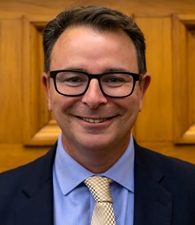
The summit also heard from both sides of the political spectrum with the Minister Commerce & Consumer Affairs Cameron Brewer undertaking a live QnA from Parliament and touching on the role advisers play in helping New Zealanders with retirement income and insurance and outlining recent financial service reforms. He noted that it was encouraging that last year, 28% of New Zealanders got financial advice.
“The job now is to make sure everyone who wants financial advice can actually get it. Advisers, professional bodies, providers, consumer groups and policymakers all have a part to play.”
Labour’s spokesperson for Finance & Economy Savings & Investment Barbara Edmonds pointed to the opportunities for advisers and discussed advisers using their skills to access under-served communities to help them build wealth and protect their families.

She noted Government has a role to raise awareness of advisers’ presence and to ensure the rules the profession operates in are balanced between consumer protection and sufficient flexibility so advisers can offer the diversity of products the advice profession knows are there to help families thrive.
The US-based CEO of the Financial Planning Standards Board Dante de Gori delivered a keynote speech which addressed the standards and framework that define the global financial advice profession.
Another session featured the CEO of Financial Advice Association Australia Sarah Abood and Financial Planning Institute of Southern Africa Chief Executive Officer Lelané Bezuidenhout.
…the number of advisers throughout Australia now stood at 15,000 from a high of 29,000 in 2019…
Abood discussed the regulatory regime Australian advisers worked under, noting the number of advisers throughout Australia now stood at around 15,000 from a high of 29,000 in 2019 with advisers having to answer to nine regulators.

She also pointed to the cost of providing advice now sitting around AU$4,700, making advice out of the reach of many Australians.
When asked by Hakes what her advice was to financial advice in NZ around navigating the regulatory, political and professional environment, Abood said her reflection is that the less positive aspects of regulation in Australia have come out of crisis. Out of something going wrong, with the government feeling obliged to act and to act quickly, and then over-correcting.
She said one of the challenges, if possible, is to focus more on prevention and when there is a failure, to look at the root cause to try to stop that failure.
