
The Financial Markets Authority has published new research addressing significant knowledge gaps within New Zealand’s financial system about experiences of tangata whenua with insurances.
The report, Experiences of tangata whenua with insurances, which looks at general, life and health insurance, highlights that insurance is of significant interest to Māori but the current system does not consistently meet the needs of whānau, hapū and iwi.

Executive Director Governance, Policy and Strategy, Liam Mason, says the research is part of the FMA’s Matangirua programme of work, which seeks to understand the experiences of Māori within New Zealand’s financial system and asks the question: what does fair look like for Māori?
“We know from previous FMA research that Māori are consistently less likely to hold insurance products than the wider population. This report helps us better understand the perspectives and experiences that sit behind those observations and provides a foundation for future discussion and action.”
Led by Dr Lara Greaves, the research had almost 1,000 participants, including 952 survey participants from the Te Ao Mārama panel.
…Affordability was the strongest and most consistent barrier to insurance…
It found affordability was the strongest and most consistent barrier to insurance, with 82% of survey participants agreeing that people do not have enough money for insurance costs. Other key barriers included distrust and mistrust, accessible information, climate change and weather event related risk and product suitability.
Strategic Adviser Māori, Hannah Chapman, said the same themes emerged consistently in the research.
“The issue is not whether insurance is valued, but that a range of barriers make insurance impossible for some to access and hard for some to maintain. 17% of participants experienced problems with insurance in the last two years which is almost double the rate found in a similar survey of the general population.”
She says current insurance settings do not accommodate whenua Māori and multiple or collective ownership and ways of living “…including papakāinga and marae although there are some attempts at solution finding happening. Participants also raised concerns about valuation, replacement costs and whether insurance products adequately reflect actual risk and cultural and intergenerational value.”
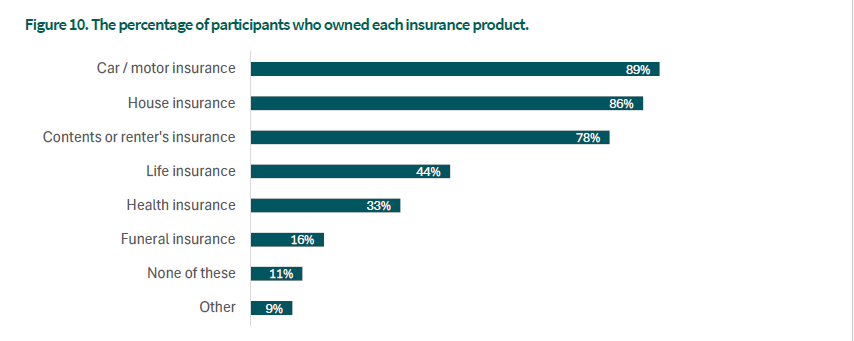
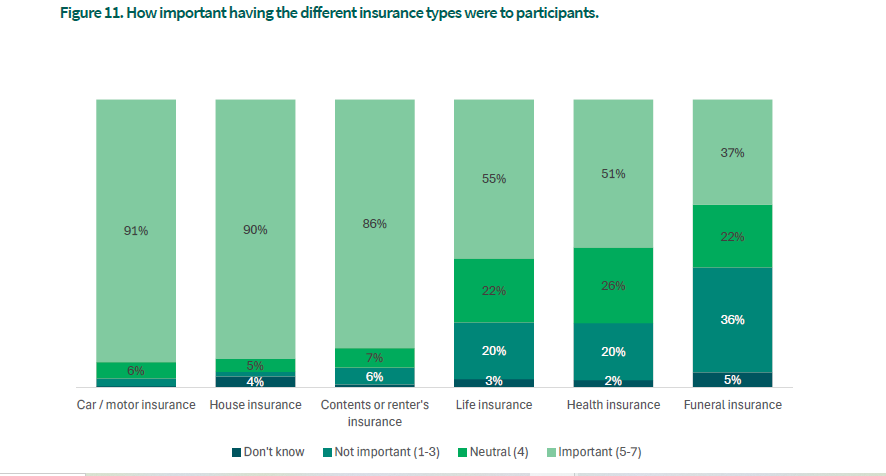
With regard to life and health insurance, the report notes that the the gap between those in the sample thinking an insurance was important and holding that insurance was wider for life insurance (55% important; 44% have) and health insurance (51% important, 33% have).
“ This shows a potential unmet need in communities for these types of insurance,” the report says.
The FMA says the research identified the need for mutual literacy – for whānau and owners and governors of whenua Māori to strengthen their financial literacy and for the insurance sector to build cultural literacy including understanding of te ao Māori (Māori worldview), collective ownership structures and the relational nature of trust.
It says participants also identified practical solutions, expressing strong support for iwi-led and Māori-designed approaches (71 percent of survey participants agreed) and trusted navigators as ways to support whānau with claims processes (71 percent of survey participants agreed).
Participants described iwi as well placed to develop solutions that reflect local circumstances, collective ownership arrangements and intergenerational priorities.
They also pointed towards clearer information about policies and processes and more accessible products and services as solutions.
The FMA points to one survey participant saying, “A one-size-fits-all insurance model does not serve Aotearoa well. By embedding Māori perspectives into the design of insurance systems, policymakers can create a more inclusive, equitable, and resilient future for all.”
Mason says the report is intended as a starting point for discussion rather than an endpoint. “What the research makes clear is that insurance matters to Māori, and Māori communities are already pointing to the answers. We look forward to continuing the conversation with iwi, hapū industry, and other stakeholders to prioritise actions around what a fair and effective insurance system looks like for tangata whenua.”
Click here or on the report cover below for the full report.