
A new FSC report, which brings together the latest available data to provide a snapshot of New Zealand’s financial and insurance services sector, highlights the growth in the wider sector but notes that New Zealand remains one of the most under-insured countries in the OECD.

The council’s State of the Sector Report, which covers the wider financial services sector including banking, investment, superannuation and Kiwisaver, includes a dedicated section on life insurance and highlights:
- 4.13 million life insurance covers, with NZ$1.368 billion paid in claims in the year to September 2025
- 1.35 million health insurance covers, with NZ$2.545 billion paid in claims over the same period

FSC CEO Kirk Hope says in a statement that despite this “…New Zealand remains one of the most under-insured countries in the OECD, signalling a significant resilience gap for households and the wider economy.”
He says the report – which analyses multiple data sources over a five-year period to map key trends – reinforces the financial services sector’s critical role as a cornerstone of New Zealand’s economic and social wellbeing.
“The data gives us a clear evidence base for identifying where the opportunities lie – whether that’s growing KiwiSaver participation, deepening capital markets, or improving insurance coverage.”
The life insurance section in the report points to life insurance population coverage through FSC research as remaining at approximately 35% of respondents who indicate they hold a form of life insurance.

It notes too that premiums and claims for life insurance have grown steadily, averaging 3% per year.
“From 2022 to 2025, the average premium per member increased slightly from around $1,500 to just under $1,600, while average claims per cover rose from approximately $500 to about $600. Through 2024, growth in life insurance premiums per insured slowed, indicating a reduction in cover on average.”

Age-based coverage trends
According to the FSC research population (18 years or older, self-reported coverage), life insurance uptake varies by age.
“Among adults aged 29 and below, 26% currently hold a policy, while a majority (57%) have never had coverage. Uptake rises in mid-life, peaking at 45% for ages 30–39 and 43% for ages 40–49, with over 60% of individuals in these brackets having either current or previous coverage.
“In contrast, older adults (60+) show lower current coverage at 23%, but nearly half (46%) previously held life insurance, suggesting lapses after retirement. These patterns indicate that life insurance is strongly age-dependent,” the report says.
FSC member data shows that life insurance coverage is higher among males at 21.2% compared to 19.4% for females. Males claim more relative to the premiums they pay, highlighting a difference in claim patterns.
Financial Advice Sector
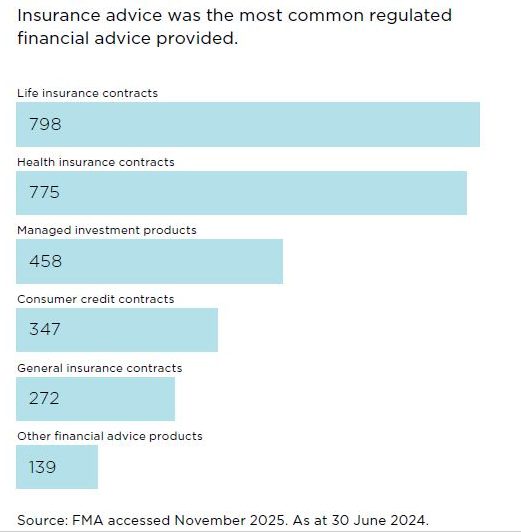
The report also contains a section on financial advice which notes the most common service offered by licensed FAPs is regulated financial advice on financial products. This includes guidance on insurance, investments and credit contracts. “The prevalence of these services underscores the sector’s role in meeting everyday financial needs.”
It adds that life and health insurance contracts dominate the product categories for which advice is provided, followed by investment products and consumer credit contracts.
“Many FAPs offer advice across multiple product types or maintain referral arrangements, enabling a holistic approach to client financial wellbeing.”
The graph below shows the top six financial advice products.
A growing and increasingly productive sector
In looking at the wider financial services sector the FSC report shows that the sector contributed NZ$16.1 billion in GDP (year ended June 2025), ranking it seventh among all industries, ahead of sectors including agriculture and wholesale trade.
The council says that over the past five years, financial sector GDP has increased by 9.5%, reflecting steady expansion through a period of global economic volatility.
“Employment has expanded significantly, with 73,146 jobs filled as at September 2025 – up more than 16% since May 2019. The number of businesses operating in the sector has grown to around 700, representing a 27% increase over the past decade,” the report says.
The report is sponsored by KPMG. Click here to access the full report.