



The percentage of New Zealand financial advisers’ adopting AI is higher than that of their global counterparts and Kiwi advisers have a more positive outlook about AI’s potential impact in financial advice, the New Zealand results of a global study have found.

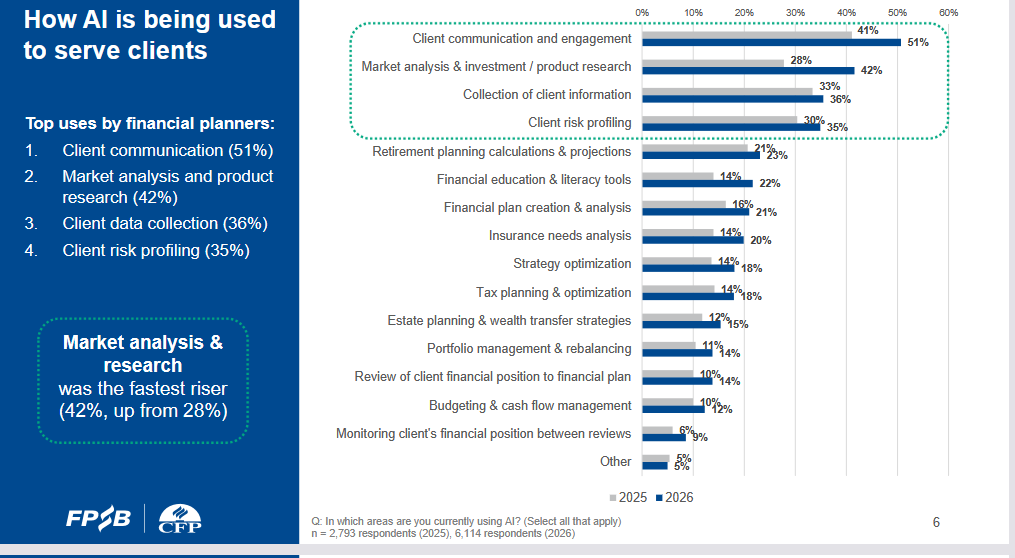
The Financial Planning Standards Board has just released new global research 2026 Impact of AI on Financial Planning, now in its second year, which found that financial planners around the world are increasingly using AI to increase operational efficiency, support market analysis and serve more clients.
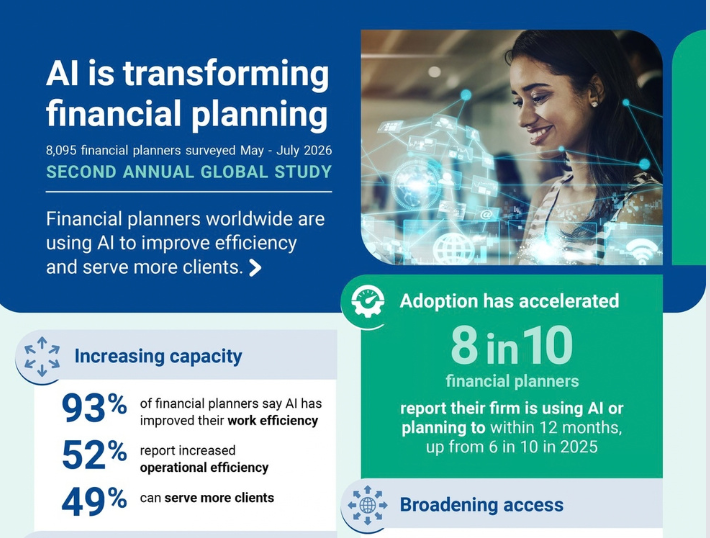
It says “adoption has passed the tipping point” with globally eight in 10 financial planners reporting their firm is using AI, or planning to do so within the next 12 months, up from six in 10 in 2025.
Nick Hakes, CEO of Financial Advice New Zealand, says 104 financial planners from New Zealand contributed to the global FPSB AI research initiative.
He says insights from the New Zealand survey results “…highlight that adoption of AI for our financial planners is more advanced at 87% compared to the global average of 80% and we have a more positive outlook about AI’s potential impact in financial advice at 75% compared to 53%.”
On the global report, Financial Advice NZ says financial planners also say that clients are bringing AI-generated information into financial conversations “…making the role of a financial planning professional who has committed to rigorous standards of competency and ethics even more critical.”
FPSB CEO Dante De Gori says AI has the potential to expand access to financial planning and improve the ways financial planners serve their clients “…but technology alone cannot replace the judgement, ethical responsibility and human understanding that financial planning professionals can deliver.”
Key findings from FPSB’s global research include:
- Financial planners are optimistic about AI’s ability to improve client service: Eighty-three percent say AI will help them better serve clients (up from 78% in 2025) and 75% say it will improve the quality of advice (up from 60% in 2025)
- AI anticipated to broaden access to financial planning: Seven in 10 advisers expect AI to increase access for underserved populations (up from six in 10 in 2025) while 68% believe it will lower the cost of advice (up from 59% in 2025)
- Consumers are already using AI in financial decision-making: Thirty-three percent of financial planners report that when their clients use AI for financial matters it’s most commonly for general financial education, while 25% use it to validate or compare professional advice
- Client use of AI for financial matters is beginning to re-shape planner-client conversations: Twenty-one percent say that client use of AI has led to an increased need to contextualise or correct AI-generated information, while 19% report AI usage by clients led to an increase in collaborative discussions
De Gori says AI may become an increasingly common support tool in financial planning but it is not a substitute for professional judgement.
“As more consumers use AI to learn about finances, financial planners can help them understand what is relevant, what requires caution and how financial decisions fit within a broader, long-term plan.”
Hakes also notes that Financial Advice NZ has been proactive in supporting advisers implement AI into their advice process through the development of an executive short course, AI in Advice Certificate. “Feedback from advisers overwhelmingly demonstrates that they are more confident in adopting AI into their advice practices.”
FPSB and its global network conducted the global survey online capturing responses from 8,095 financial planners across 37 territories.
Click here to see key findings from the FPSB report.