




New FSC research, released at the council’s 2026 conference, shows Kiwis are open to AI helping detect scams, answer questions and make financial services easier to use, but draw the line at AI making big decisions about their money.
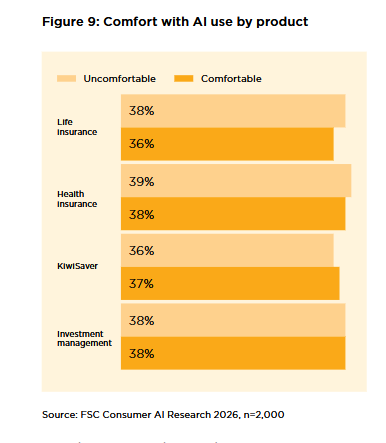
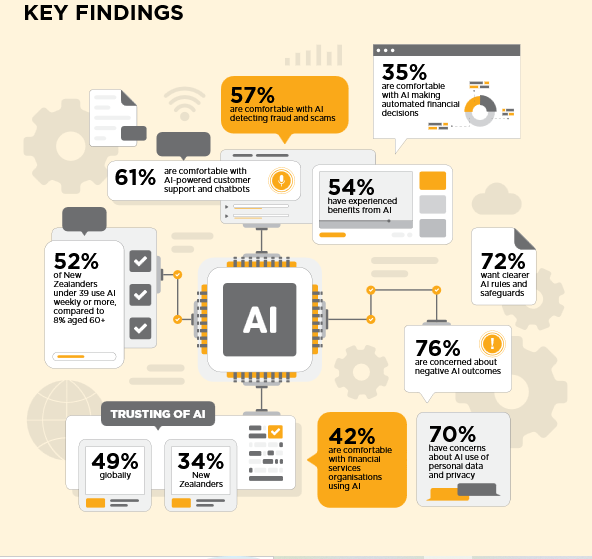
The report finds 42% of consumers are comfortable with financial services organisations using AI overall, compared with 36% who are uncomfortable. Comfort is similar across life insurance, health insurance, KiwiSaver and investment management, suggesting consumers are applying a broad, cautious lens to AI across the sector.
The FSC says the report, Artificial Intelligence and the Future of Financial Services in New Zealand, brings together global evidence, national context and FSC’s own sector research to understand how trust in AI is forming. It shows Kiwis are embracing AI, but are cautious about where it is used and who remains accountable – particularly around big financial decisions.

FSC Chief Executive Kirk Hope says the findings are a clear signal for the sector.
“AI is no longer some distant technology or a handy tool for writing emails. It’s here and reshaping how businesses operate, and financial services is no different,” he says.
“With nearly two thirds of people comfortable using it, Kiwis can clearly see the value of AI when it helps them get answers, spot scams or cut through paperwork. But they’re much less comfortable when AI moves from helping to deciding.”
The report finds consumers are most comfortable with AI when it is used to support, protect or simplify:
- 61% are comfortable with AI-powered customer support
- 57% with AI detecting fraud and scams
- 58% with AI explaining financial products clearly
- 55% with AI helping complete forms
But, the FSC says, comfort drops sharply when AI starts making decisions. 44% are uncomfortable with AI making automated financial decisions, with only 35% comfortable.
Hope says the message for financial services providers is clear. “The closer AI gets to a consequential financial outcome, the more consumers expect transparency, fairness and human oversight.”
…70% of Kiwis are concerned about privacy and AI’s use of personal data…
The research also shows strong demand for guardrails – 70% of Kiwis are concerned about privacy and AI’s use of personal data, and 62% are concerned it could reinforce bias or discrimination.
Hope says trust will not build itself.
“The financial services sector needs to be proactive. That means clear governance, plain-English communication and practical human checkpoints for high-impact decisions,” he says.
“AI can improve service, reduce friction, strengthen fraud detection and help people better understand their options. But if customers feel AI is opaque, unfair or being used to remove human accountability, trust will go backwards quickly.”
The report also finds confidence matters. Around 60% of people with high financial confidence are comfortable with AI, compared with only 18% to 22% among those with low financial confidence.
“If AI is going to improve access and outcomes, the sector must support people who are less confident, less digitally familiar or more vulnerable – not leave them further behind.”
Click here to see the FSC’s Artificial Intelligence and the Future of Financial Services in New Zealand report.