




Financial advisers in Australia could cut the cost of producing Statements of Advice by up to half by embedding artificial intelligence into their workflows, according to three fintech founders demonstrating a range of new tools at Riskinfocus 26.
While the technology promises to turn long manual processes into something completed in minutes, panellists at the Melbourne event cautioned that adoption comes with new operational, compliance and governance risks that practices must actively manage.
During a panel presentation moderated by iExtend CEO, David Sarkis, Co-founder and CTO, Paradino, Josh Ratnarajah, said early adopters are already seeing meaningful cost reductions.
…firms …have “already shaved off at least 30%” of SoA production costs
He estimated firms using AI in their advice process have “already shaved off at least 30%” of SoA production costs, with potential savings rising toward 50% as capabilities improve.
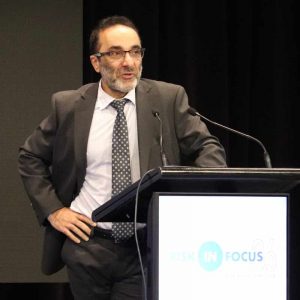
Ratnarajah noted the key driver is not just automation, but removing friction, particularly the “handoff between lots of different people and the miscommunication” that adds time and cost.
Over time, Ratnarajah said, advice workflows are likely to mirror trends seen in software development, where humans increasingly shift from doing tasks to supervising, planning, and validating AI-generated outputs.
Despite the efficiency gains, uptake is not purely a technology issue.
Shakeel Lala, CEO, Marloo, said one of the biggest barriers is psychological, with advisers conditioned by legacy systems requiring heavy compliance and procurement sign-off before use.
“That era is over,” he suggested, arguing modern tools should be able to be tested “in a couple of minutes”.
He urged advisers to take a more hands-on role in evaluating tools, rather than leaving decisions solely to compliance or management.
“You’re the end user touching the tool,” he said, noting that direct experience helps ensure technology actually fits adviser workflows.
Data security remains a central concern for advice practices handling sensitive client information.
…Think holistically about the change you want to introduce…
However, Ratnarajah argued AI tools should not be viewed as inherently riskier than other software providers.
Instead, he said advisers should apply standard due diligence:
- Check for recognised security frameworks (such as SOC 2 compliance)
- Ensure regular audits
- Confirm incident response plans are in place
“Nothing is bulletproof,” he said, but risk can be minimised through proper controls.
Sarkis raised that the more nuanced risk is the quality of AI-generated outputs, as it is prone to making things up that appear to be perfectly sound on the surface.
Connor Disselkoen, Co-founder, Claras acknowledged that AI systems can produce highly confident, but incorrect, results, a phenomenon already observed by firms testing internal “sandbox” environments.
To manage this, he said practices need both:
- Vendor-side safeguards, including prompt engineering, testing and continuous refinement
- Practice-level governance, such as controlled rollouts, template management and iterative testing
He likened implementation to software deployment, where changes should be trialled with small groups before being rolled out more broadly, and rolled back if needed.
No silver bullet
Panellists were unanimous that AI will not eliminate complexity in the advice businesses.
Disselkoen said AI can replaces existing problems with “a better set of problems”, trading manual inefficiency for challenges around oversight, validation, and process design.
For advisers considering adoption, the panel emphasised a disciplined, commercial approach.
Ratnarajah said firms should:
- Identify their biggest cost or efficiency bottlenecks
- Deploy AI selectively to address those areas
- Measure return on investment, including how freed-up time is redeployed
Meanwhile, Lala encouraged a broader rethink of technology stacks, warning against layering AI onto already inefficient systems.
“Think holistically about the change you want to introduce,” he said, rather than simply adding new tools.
